

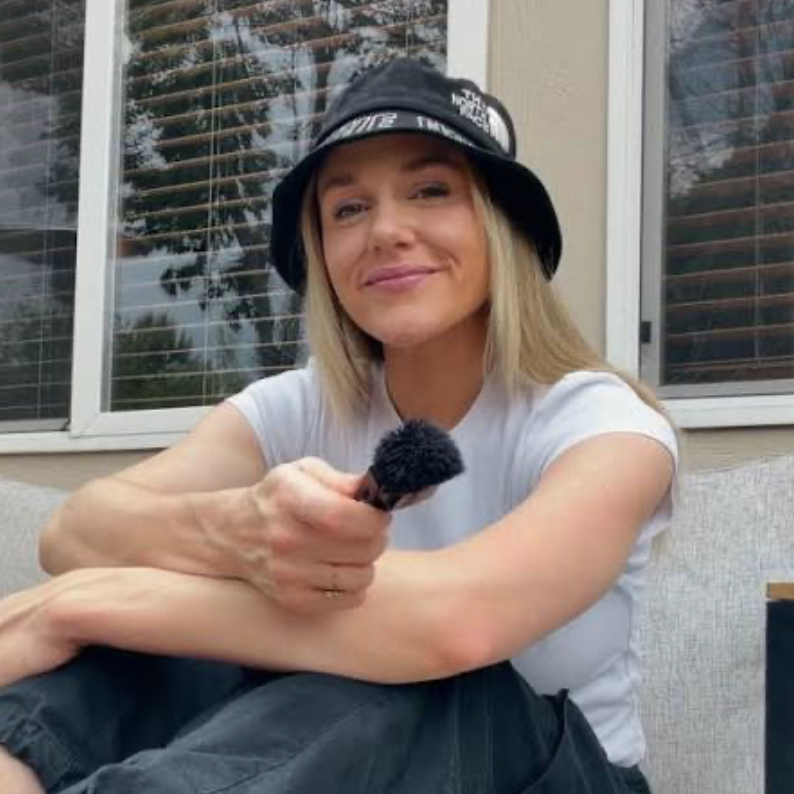
Image Source: Jessi Jean @Jessijeanhome
On finding your voice, making complicated ideas feel simple, and why knowing how to communicate might be one of the most valuable creative skills of all.
Some people leave you inspired by what they've built. Others leave you thinking differently. Jessi Jean is one of those people. What makes her interesting isn't simply her ability to capture attention online, but the way she approaches something so many of us struggle with: taking the thoughts, ideas, and experiences in our heads and communicating them in a way that other people actually understand.
It's a familiar frustration, especially for creative people. You can spend years developing a skill, building a business, or becoming knowledgeable about something, only to find yourself stumbling when someone asks you to explain it. You know what you mean. You can practically see the entire concept in your head. But somewhere between having the idea and putting it into words, something gets lost.
Image Source: Jessi Jean @Jessijeanhome
Jessi has built an audience around that very problem, although her path into communication education wasn't entirely conventional. Before becoming known for her direct-to-camera videos, she spent years supporting women through binge-eating recovery. In November 2025, she began posting about a wider range of subjects, including career uncertainty, money, social media, and everyday life. She brought her understanding of human behavior into the way she structured and delivered those conversations, paying attention not only to what she said but to how people received it.
Within five months, she reported growing an audience of more than 400,000 followers across platforms. By June 2026, her online communication challenge had reportedly generated $1.2 million in its initial launch. Those numbers are extraordinary, but they're not necessarily the most interesting part of the story. What's worth examining is how someone who once found speaking directly to a camera intimidating turned that very discomfort into the foundation of a new business.
Her program, Yap On Camera, is built around a deceptively straightforward idea: communication improves through practice. Participants work through a structured series of lessons and daily posting exercises, learning to develop their message, organize their thoughts, and become more comfortable speaking publicly. The curriculum explores the mechanics of attention, including opening lines, pacing, tone, delivery, and the relationship between a speaker and an audience. But underneath the practical instruction is a larger question about why so many capable people hesitate to make themselves visible.
There's something particularly relevant about that question right now. We're living in a time when almost anyone can publish their ideas, build a platform, or introduce their work to an audience without waiting for traditional permission. The opportunities are enormous, but so is the pressure to communicate well. Having a good idea is no longer enough if you can't explain why it matters, and expertise doesn't always translate into the ability to hold someone's attention.
For women building businesses, changing careers, or establishing themselves in creative industries, this can become an unexpected obstacle. The work itself may be familiar. Speaking about it publicly can feel entirely different. Suddenly you're expected to be the strategist, the spokesperson, the storyteller, and sometimes the entire marketing department. You're not only responsible for creating something valuable; you're also responsible for helping people recognize its value.
What I find compelling about Jessi's approach is that she doesn't present communication as a mysterious talent reserved for naturally charismatic people. She treats it as something that can be developed, observed, and practiced. In her teaching, she emphasizes repetition, becoming more comfortable with imperfect delivery, and understanding the person on the other side of the screen. It's less about memorizing a polished script and more about becoming familiar enough with your own thoughts that you can express them naturally.
Of course, being comfortable on camera and being a thoughtful communicator aren't exactly the same thing. A person can become very good at capturing attention without necessarily having much to say. Social media also rewards certain styles of delivery that don't always translate into meaningful conversation. But that's what makes the distinction between visibility and communication so important. Attention may introduce someone to your work; clarity helps them understand it.
There's also a broader lesson in the way Jessi has approached her business. She didn't begin by presenting herself as a traditional media trainer or professional speaker. Instead, she documented what she was learning, tested her own methods publicly, and eventually developed an educational offering around the experience. Her business emerged from a skill she was actively developing, rather than a polished professional identity she'd spent years establishing.
That approach reflects a larger change in how creative businesses are built. Increasingly, people are finding opportunities not only in what they know, but in their ability to make that knowledge accessible to others. A useful observation, a clear explanation, or a well-told personal experience can become the beginning of a much larger conversation. And when that conversation consistently helps people solve a problem, it can create the foundation for a business.
Still, Jessi's rapid growth is an exceptional example, not a formula that guarantees similar results. Social platforms are unpredictable, audiences respond differently, and even thoughtful communication doesn't ensure commercial success. What her story does illustrate is the value of recognizing a problem that people are already experiencing and developing a practical way to help them work through it.
Image Source: Jessi Jean @Jessijeanhome
I keep returning to the idea that many of us don't necessarily need more ideas. We need to become better at communicating the ones we already have.
For creative women in particular, there's often an enormous amount of thought behind the things we're building. Years of experience, personal observations, professional knowledge, and ambitions that don't always fit neatly into a short introduction or a sixty-second video. The challenge isn't simply learning to speak more confidently. It's learning to identify what matters most in everything we want to say, and trusting that our perspective is worth sharing.
Perhaps that's why Jessi's work has found such an audience. She's addressing something that extends well beyond content creation: the uncomfortable experience of knowing you have something to contribute but not yet feeling confident enough to communicate it.
And there's something encouraging about the possibility that this can change. That the ability to articulate our ideas doesn't have to arrive fully formed, and that becoming a better communicator can be part of becoming better at the work itself.
