

On motherhood, professional identity, and the difficult realization that success may need to look different than you once imagined.

Photography: Courtney Dias | The Ethos Edit
For a long time, I had a fairly clear picture of what a successful career was supposed to look like. Work for respected brands. Earn a senior title. Make good money. Become the person companies trusted to help build their vision into something bigger. And for years, that's exactly what I worked toward. I loved the creative process, the responsibility, and the satisfaction of seeing something I'd helped develop make its way into the world. There was something deeply rewarding about taking an idea and giving it an identity, a direction, and a place in the market. But somewhere along the way, the life I was building began to change, and the career I'd spent years working toward didn't always seem to have room for it.
I don't think there was one dramatic moment when everything stopped making sense. It happened gradually, through a series of transitions that seemed like ordinary parts of adulthood. After my first son was born, I spent two years at home with him before returning to work. Then came COVID, another period of uncertainty that changed how we lived and worked. Eventually, I found my rhythm again. For several years, I was back in the professional world, building brands, leading creative work, and feeling that familiar sense of momentum. Then I had another baby, and once again, life required a different version of me.
Looking back, I realize how much of my career has happened in stretches of stopping, starting, rebuilding, and adjusting. Each time I found my footing, something in my personal life changed. Meanwhile, the creative industry itself was evolving at an extraordinary pace. The tools, expectations, platforms, and ways of working were shifting, sometimes faster than anyone could reasonably keep up with. There's a particular exhaustion that comes from constantly having to find your place again, not because you've lost your ability to do the work, but because the conditions around it keep changing. We often frame professional ambition as a straight line: gain experience, earn promotions, and gradually move toward a more established version of success. But life rarely follows that progression, especially when you're raising children. Sometimes you're moving forward. Sometimes you're stepping away. And sometimes you're doing everything you can simply to maintain the ground you've already gained.
For me, the most difficult part wasn't losing interest in creative work. I still love building concepts, developing ideas, connecting people, and putting something into the world that others can experience. What changed was my relationship with the structure surrounding that work: the schedules, the expectations, and the amount of energy required to be fully available to a career while also being responsible for a growing family. And perhaps most importantly, I began questioning whose vision I wanted to spend my life building. For much of my professional life, I helped other people grow their businesses, their brands, and their ambitions. There was value in that work, and I don't regret it. It taught me an enormous amount about creativity, business, and the people behind successful companies. But I began thinking more seriously about what I wanted to leave behind.
I've always been drawn to the idea of legacy. Not necessarily recognition for its own sake, but the possibility of creating something with a life beyond the immediate project or paycheck. Something that could grow, evolve, and eventually become part of my family's story. I imagined my children one day walking into a space or discovering something I'd created and saying, Hey, this is my mom. She built this. Over the years, that idea took different forms. Sometimes it looked like a creative business, sometimes a physical space, sometimes a team of thoughtful, talented women working together on something meaningful. The details changed, but the desire remained consistent. I wanted to create something that was mine, something I could be proud of, and something that could provide financial independence without requiring me to give up the parts of life I valued just as deeply.
Of course, wanting that and figuring out how to make it happen are two very different things. Leaving a full-time creative leadership position was difficult, and the hardest part was financial. There's no particularly elegant way to describe what it feels like to step away from an income you've worked hard to earn, especially when your family's responsibilities are growing rather than shrinking. The bills don't become smaller because you've decided to reconsider your career. Children still need what they need, and life continues to be expensive and unpredictable. Financial independence has always mattered to me, not simply because I wanted a certain lifestyle, but because earning my own money gave me a sense of stability and freedom. Walking away from that security, even when the decision makes sense for your family, can feel like being caught between two equally important needs: you want to be present for your life, but you also need to be able to afford it.
I think that's where the conversation about meaningful work becomes more complicated than we're often willing to admit. It's easy to encourage women to follow their passions, create their own schedules, or build businesses around the lives they want. It's much harder to acknowledge the financial uncertainty that can come with those decisions, or the reality that flexibility is not always something people can afford to prioritize. For some women, staying in a demanding job is the only practical option. For others, leaving the workforce creates a different kind of pressure. And for many of us, the answer lies somewhere in the uncomfortable middle, where we're trying to maintain our earning potential while creating a life that feels sustainable.
I don't believe there's one correct way to navigate that. What I do believe is that we should be able to reconsider what success looks like without treating that reconsideration as a failure. A career that made sense at twenty-five may not fit the life you're living at thirty-five or forty-five. The things that once motivated you may still matter, but they might no longer be enough to justify the sacrifices required to pursue them in the same way. That doesn't mean you've become less ambitious. It may simply mean you're asking more of your ambition.
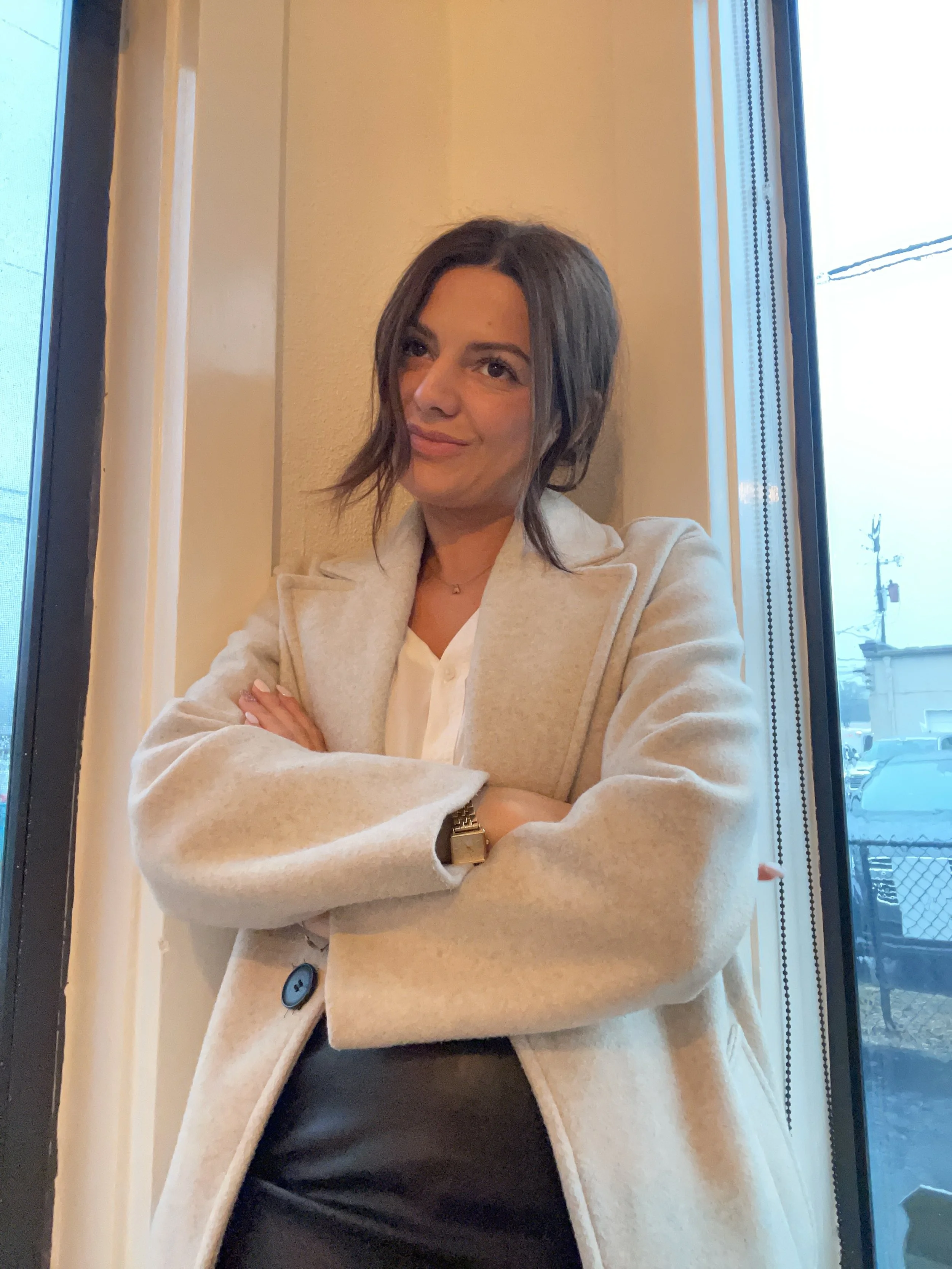
I used to associate professional accomplishment with the level of responsibility I held, the brands I worked with, and the income attached to my position. Those things still have value, but they no longer tell the whole story. Today, when I imagine a career that genuinely fits my life, I think about being able to work remotely, create thoughtful work, connect interesting people, share resources, and build something that makes other women feel seen and supported. I still want financial stability, creative leadership, and the opportunity to create things people recognize and value. One day, I would love to build a team of women who are not only talented but genuinely kind, encouraging, and invested in one another's success. Those ambitions haven't disappeared. If anything, they've become more specific. What I'm trying to change is the way I pursue them.
And that isn't necessarily easier than following a traditional career path. Creating your own opportunities requires patience, discipline, and a willingness to live with uncertainty. Working from home doesn't eliminate the demands of parenting, and building something independently can mean spending months doing work that may not produce immediate financial returns. There are days when the security of a predictable paycheck feels enormously appealing, and others when I can't imagine returning to a professional life that requires so much of my availability. Both feelings can exist at once. You're not necessarily unhappy with the career you've built. You may even be proud of it. But you're beginning to recognize that being good at something doesn't automatically mean it's the right way to spend the next chapter of your life.
I'm learning that a career can be a collection of chapters rather than one uninterrupted climb toward a particular destination. Some are about gaining experience, others about earning well, building credibility, or learning how to lead. Some require us to slow down, whether we want to or not. And occasionally, one makes us reconsider what all the previous chapters were preparing us to do. Leaving a particular role doesn't mean leaving your professional identity behind. The skills you've developed, the relationships you've built, and the perspective you've gained don't disappear when your job title changes.
I don't know exactly what my professional life will look like ten years from now. I hope it includes meaningful creative work, financial independence, wonderful people, and something lasting that my children can feel proud of. But I also hope it leaves room for the ordinary parts of life that I don't want to miss while I'm busy building it. Perhaps the real challenge isn't deciding whether to keep the career you've built or walk away from it, but giving yourself permission to take everything you've learned and build a different kind of professional life with it. One that doesn't require you to become less ambitious, only more intentional about what your ambition is for.
